What To Know Before Buying A Home In Scottsdale
May 14, 2026
May 14, 2026
Buying in Scottsdale can feel exciting and a little overwhelming at the same time. Prices vary widely by area, home styles range from condos to large desert estates, and the right choice often depends on more than square footage alone. If you want to buy with confidence, it helps to understand how Scottsdale’s submarkets, ownership costs, and desert-specific factors can shape your decision. Let’s dive in.
One of the most important things to know before buying a home in Scottsdale is that it works more like a collection of submarkets than a single market. Citywide numbers are useful for context, but they do not tell the full story of what you will see from one area to the next.
In March 2026, Redfin reported a citywide median sale price of $965,000. Realtor.com showed a median listing price of $999,000, while Zillow estimated an average home value of $858,022. These figures measure different things, so they are not conflicting. They simply show that Scottsdale is a premium market with a broad range of price points.
The pace of the market also varies depending on the property and price band. Redfin reported homes selling in about 58 days with roughly one offer on average, and noted that the typical home sold about 3% below list price. That tells you Scottsdale can still be competitive, but it is not automatically a bidding-war market across the board.
North Scottsdale sits in a higher price tier than much of the rest of the city. Redfin reported a March 2026 median sale price of $1.33 million there, compared with $877,500 in South Scottsdale. If you are drawn to larger homes, master-planned communities, and a more desert-oriented setting, this is often where your search starts.
North Scottsdale’s growth also included several large-scale master-planned communities, including McDowell Mountain Ranch and DC Ranch. That can mean strong neighborhood identity, planned amenities, and a more structured community layout. It can also mean added fees or district assessments, which you should review carefully.
South Scottsdale often attracts buyers looking for older homes and a wider range of price points. The city’s Southern Scottsdale character area covers roughly 14 square miles south of Indian Bend Road, and much of the housing stock and commercial space there was already more than 30 years old when the plan was adopted.
For you, that may create opportunity. Older housing can mean remodel potential, different lot layouts, and a lower entry point than North Scottsdale. It also means you should pay close attention to condition, systems, and maintenance history during your search.
Old Town is Scottsdale’s downtown character area, with boundaries defined by Chaparral Road, Earll Drive, 68th Street, and Miller Road. The city’s planning update treats it as a distinct area with its own growth and redevelopment vision, including a specific arts and culture focus.
If you want a more downtown-oriented lifestyle, Old Town deserves its own category when you compare options. It is not the same experience as buying in more suburban or desert-edge parts of Scottsdale. Your daily routine, traffic patterns, and nearby amenities may feel very different here.
The Greater Airpark is another area that should be evaluated on its own terms. The city identifies it as Scottsdale’s largest industrial-zoned area and a growth corridor tied to development and airport-based business parks.
That does not make it better or worse. It simply means the housing and employment setting can feel different from more residential parts of the city. If you are considering this area, think carefully about how the surrounding land use fits your lifestyle and long-term plans.
In Scottsdale, buyers often shop by lifestyle features as much as by bedroom count. Local listings commonly include single-family homes, condos, townhomes, multi-family properties, mobile homes, land, and new construction. Feature filters often highlight things like guest houses, RV or boat parking, horse facilities, tennis courts, waterfront settings, boat docks, low HOA dues, and dual primary suites.
That matters because your ideal Scottsdale home may be defined by how you want to live. You may care more about access to trails, golf, or a lock-and-leave setup than whether a home has one extra flex room. A clear list of must-haves can help you narrow your search faster.
Scottsdale’s outdoor network shapes how many buyers evaluate location. The city says the Indian Bend Wash greenbelt includes an 11-mile multiuse path through parks, lakes, paths, and golf courses. It also reports a citywide trail network of 160 miles, with more planned.
The McDowell Sonoran Preserve is another major draw. Scottsdale says it includes more than 30,500 acres of permanently protected desert open space and more than 200 miles of trails. If outdoor access is important to you, proximity to preserve trailheads, greenbelt paths, or golf-course corridors may matter as much as the home itself.
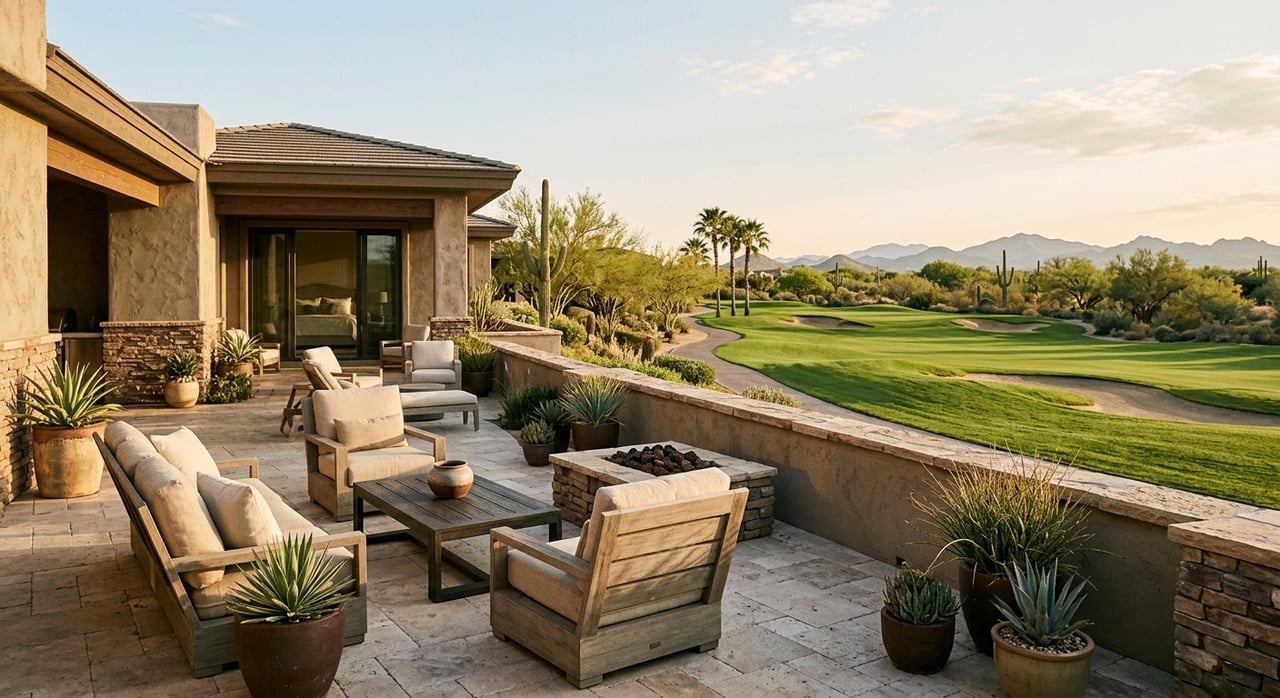
Golf is also central to Scottsdale’s identity. The city says Scottsdale has 26 golf courses covering more than 5,000 acres. If you are buying near a course, think beyond the view and consider privacy, maintenance patterns, and any amenity-related ownership considerations.
Price is only part of the equation in Scottsdale. Before you buy, you should also review HOA dues, utility expectations, landscaping upkeep, pool maintenance, and any special tax assessments tied to the community.
This is especially important in some master-planned communities. The city says DC Ranch and McDowell Mountain Ranch were formed as community facilities districts that can levy secondary property tax assessments to help fund infrastructure and amenities such as parks, trails, roads, and water and sewer lines.
Those features may add value to your experience as an owner. Still, they also affect your monthly and annual costs. A home that looks comparable on purchase price may carry a very different ownership budget once all fees and assessments are included.
Scottsdale ownership comes with desert-specific considerations that buyers should not overlook. Water use, irrigation systems, landscaping choices, and heat-related wear can all affect both cost and maintenance.
The city says water is precious in the desert and that about 90% of Scottsdale’s drinking water comes from renewable surface-water sources. It also offers rebates and resources for WaterSense products, leak repair, and smart irrigation controllers. For buyers, that makes irrigation quality, desert landscaping, and pool upkeep worth reviewing closely.
Heat is another practical issue. Scottsdale’s fire department warns about dangerous heat exposure in the desert, and neighborhood climate tools cited in the research flag severe heat risk in both North and South Scottsdale. Over time, that can affect roofs, HVAC systems, exterior materials, and outdoor living spaces.
Flooding and drainage should also be checked property by property. The city directs buyers to flood maps, wash-flow information, and homeowner drainage guidance. In simple terms, you should confirm floodplain status, ask how the lot drains, and understand how water moves on and around the property during heavy rain.
Before you make an offer, focus on the questions that matter most in this market:
These questions can help you compare homes more clearly and avoid surprises after closing. In a market like Scottsdale, details matter.
Scottsdale can reward buyers who take a focused, informed approach. The right purchase is not always the one with the flashiest finishes. Often, it is the home that fits your budget, ownership goals, and day-to-day lifestyle while also making sense in its specific submarket.
That is why local perspective matters so much here. When you understand area differences, total ownership costs, and practical desert-living details, you are in a much better position to buy with confidence. If you are planning a move in Scottsdale and want steady guidance backed by local market knowledge and finance experience, connect with Cassandra Cook.
Stay up to date on the latest real estate trends.
Cassandra Cook
Address
8388 E Hartford Dr Ste 100
Scottsdale AZ 85255