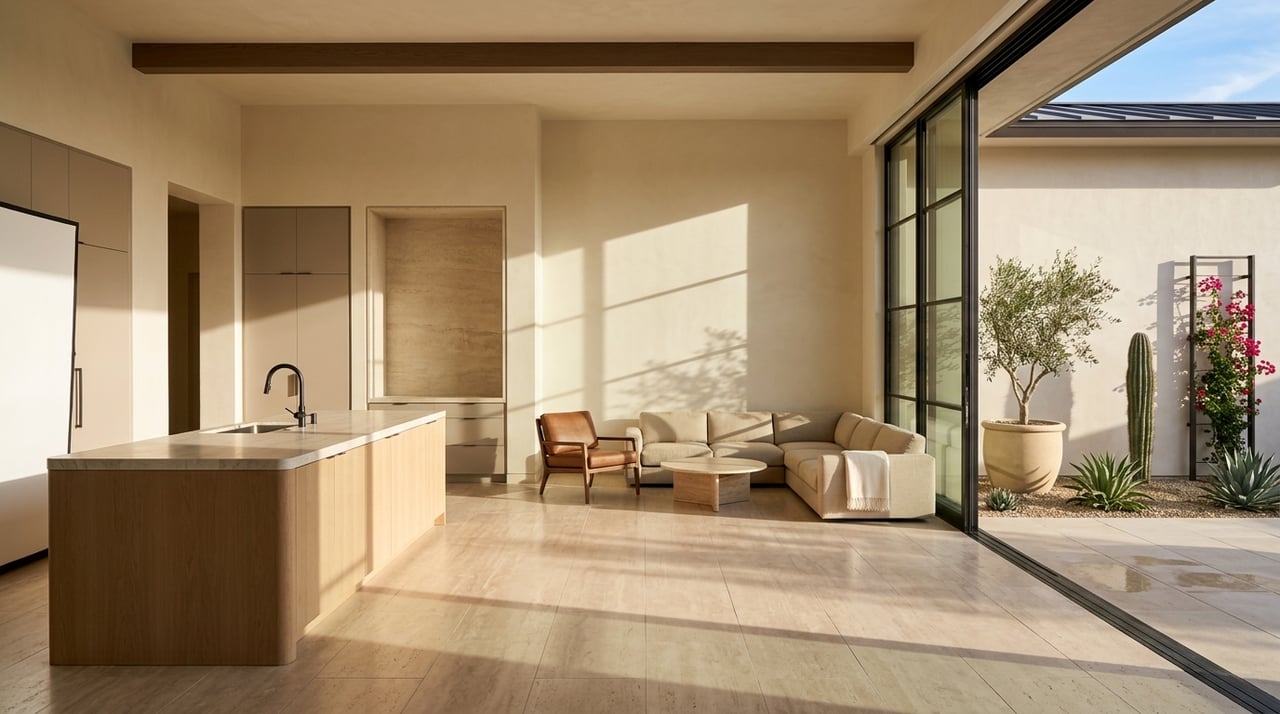
Your Guide to Buying a Home in Paradise Valley
July 9, 2026
July 9, 2026
If you are thinking about buying a luxury home in Paradise Valley, you are not just choosing a property. You are choosing lot size, views, future flexibility, utility setup, and a level of due diligence that matters more here than in many other markets. The good news is that with the right plan, you can move through the process with clarity and confidence. Let’s walk through it step by step.
Paradise Valley is a distinct luxury market with its own rules and rhythms. The town is primarily zoned for single-family residential use, and much of it is zoned R-43, which generally means lots are one acre or larger. The town also notes that its zoning and building practices can be more restrictive than other communities.
That matters because in Paradise Valley, value is not just about the house itself. Lot size, topography, orientation, setbacks, height limits, floor area ratio, and whether a property is hillside or flatland can all shape what you can do now and later. If you think you may want to expand, remodel, add a pool house, or make exterior changes, those details should be part of your home search from day one.
The market also supports a more careful approach. Recent data shows a median sale price around $4.4 million, median days on market around 91 days, and a median sale price per square foot of about $876. That points to a high-value market where buyers should be prepared, but not assume every home turns into a bidding war.
Your budget should go well beyond the purchase price. In Paradise Valley, buyers should also plan for title and escrow fees, inspections, property taxes, insurance, possible survey work, HOA-related costs if applicable, and specialty inspections for items like pools, septic systems, roofs, or older homes.
If you are buying a custom home, hillside property, or a home with future remodel potential, you may also want room in your budget for engineering, architectural review, or town-related planning after closing. This is especially important in a town where building review can be more detailed than buyers expect.
Property taxes deserve a close look too. In Maricopa County, the Notice of Value shows the legal classification, full cash value, limited property value, assessment ratio, and assessed value. The prior owner’s tax bill is not always a reliable estimate of your future tax burden, so it is smart to review tax information carefully before you commit.
Many Paradise Valley purchases fall well above conforming loan limits. For Maricopa County, the 2026 conforming loan limit for a one-unit property is $832,750, which means many buyers in this market will need jumbo financing or cash.
That is one reason early financing review matters. If you plan to finance, it helps to understand your loan structure, documentation needs, cash-to-close, and timing before you start seriously touring homes. In a luxury transaction, strong preparation can help you move faster when the right property appears.
Closing costs also deserve attention. Some closing services can be shopped, and lenders typically require lender’s title insurance. Owner’s title insurance is optional, but it is worth reviewing as part of your risk management plan.
Luxury home shopping works best when you define your non-negotiables early. In Paradise Valley, that means looking beyond bedroom count and thinking about the lot, privacy, views, access, and long-term use of the property.
Ask yourself practical questions such as:
This kind of planning keeps you from falling in love with a home that does not fit your long-term goals. In Paradise Valley, future usability can be just as important as current finishes.
Before you make an offer, take a hard look at what the parcel allows. The town states that most of Paradise Valley is one home per lot, and zoning rules cover heights, setbacks, and floor area ratio.
For buyers who want to customize, this step is critical. Paradise Valley’s Hillside Building Committee reviews many exterior and site-related changes on hillside properties, including new homes, remodels, additions, solar panels, accessory structures, and pools. Even some non-hillside properties may require detailed plan review.
If you know you want to change the property after closing, it is wise to investigate those possibilities before you are under contract or during your due diligence period. A beautiful home can still be the wrong fit if your future plans are not realistic under town rules.
One of the most important local details in Paradise Valley is that utility service is not one-size-fits-all. The town has multiple water providers, multiple sewer providers, and many homes are on septic instead of sewer.
That means you should verify exactly how the property is served. Do not assume the listing description tells the full story. Confirm whether the home uses municipal water, a private water company, or another setup, and confirm whether sewer is connected or whether the property relies on an onsite wastewater system.
If the home is on septic, resale rules are especially important. Arizona requires a qualifying inspection when ownership transfers for a property served by an onsite wastewater system, and Maricopa County requires the buyer to submit the Notice of Transfer within the required timeframe after closing.
When you tour luxury homes in Paradise Valley, look past surface presentation. Beautiful finishes matter, but so do site conditions, drainage, privacy, boundaries, and the way the house sits on the lot.
Pay attention to:
It is also smart to visit the area at different times of day. The Arizona Department of Real Estate advises buyers to drive the neighborhood and talk to neighbors to better understand everyday conditions.
One more practical note: avoid discussing your maximum price or negotiation strategy while inside a home. ADRE warns that a property may have audio or video surveillance.
In a luxury purchase, small assumptions can create big problems. ADRE notes that assessor and MLS square footage figures are often estimates and should be verified if square footage is important to your decision.
If the exact size of the home matters to you, consider confirming it through an appraiser or architect. This is especially useful for custom homes, heavily remodeled homes, or properties where enclosed spaces may have changed over time.
Boundary questions also deserve special attention on large lots. If fences, landscaping, guest structures, or neighboring use raise any concern, a survey may be warranted. You should also review the title report or commitment for easements, liens, and exceptions that could affect your future plans for the property.
Arizona buyers should review transaction documents closely, and this becomes even more important at the luxury level. ADRE specifically advises buyers to review the purchase contract, MLS printout, SPDS, title report or commitment, loan documents, HOA documents, county assessor and tax records, inspection reports, termite information, and any required disclosures.
Under Arizona resale practice, the seller should deliver the SPDS within five days after contract acceptance. This disclosure is helpful, but it is not a substitute for your own inspections and verification.
If the property is in an HOA or subject to deed restrictions, read the CC&Rs with care. Some restrictions are strict, and Paradise Valley also notes that CC&Rs are private contracts rather than rules enforced by the town.
General home inspections are important, but many Paradise Valley homes need more than a standard inspection. The right inspection package depends on the property’s age, lot conditions, features, and utility setup.
Depending on the home, you may want to consider:
If the home was built before 1978, lead-based paint disclosure is required. If the home has a pool or spa, remember that a general home inspection may exclude those features, so a separate inspection may be needed.
When you are ready to make an offer, the contract timeline should reflect the property’s complexity. Paradise Valley luxury homes often require extra verification for square footage, lot lines, title exceptions, utility service, septic status, and town-related improvement limits.
That means your inspection, title review, financing, and closing deadlines should line up with the actual work needed to evaluate the property. A rushed contract can create avoidable risk, especially if you are buying a hillside home, a large custom estate, or a property with future remodel plans.
Earnest money is another area to review carefully. ADRE advises buyers to note where earnest money is being placed and to read that section of the contract closely.
Title and escrow play a central role in closing. The title report or commitment should be reviewed closely because it lists exceptions that may affect how you use the property. Since some title and closing services are shoppable, comparing costs and service quality may also help you make a more informed decision.
Before closing, make sure key inspections, transfer documents, and any needed follow-up items are completed or clearly scheduled. This is especially important if the property has septic, HOA requirements, or title issues that need further documentation.
After closing, your checklist should include:
Paradise Valley requires permits for construction-related activities, and hillside properties may face an extra layer of review. If you plan to make changes, thinking ahead can save time, money, and frustration.
Buying a luxury home in Paradise Valley is not only about finding an impressive property. It is about understanding the land, the rules, the utilities, the documents, and the financial details that come with a high-value purchase.
That is where experienced local guidance can make a real difference. When you work with someone who understands both the Paradise Valley market and the financing side of the transaction, you can make decisions with more confidence and fewer surprises.
If you are planning a move into Paradise Valley and want clear, finance-informed guidance from your first showing to the closing table, connect with Cassandra Cook for personalized support.
Stay up to date on the latest real estate trends.
Cassandra Cook
Address
8388 E Hartford Dr Ste 100
Scottsdale AZ 85255