Paradise Valley Resorts and Lifestyle Guide
July 23, 2026
July 23, 2026
What if your everyday routine included mountain views, resort dining, a spa afternoon, and a desert trailhead just minutes from home? If you are exploring Paradise Valley, you are probably looking for more than a beautiful house. You want to understand how the area actually lives day to day, and whether its luxury reputation translates into a comfortable, lasting lifestyle. This guide will show you how Paradise Valley blends historic resorts, outdoor access, and quiet residential living into one distinctive desert experience. Let’s dive in.
Paradise Valley is a small, low-density town in Maricopa County with an estimated 2025 population of 12,251 and a land area of 15.38 square miles. According to Census QuickFacts cited in the town’s 2022 General Plan, the housing profile is strongly owner-occupied at 95.0%, with a median home value above $2,000,000 and a median household income of $247,159. Those numbers help explain why the town feels highly residential rather than commercial.
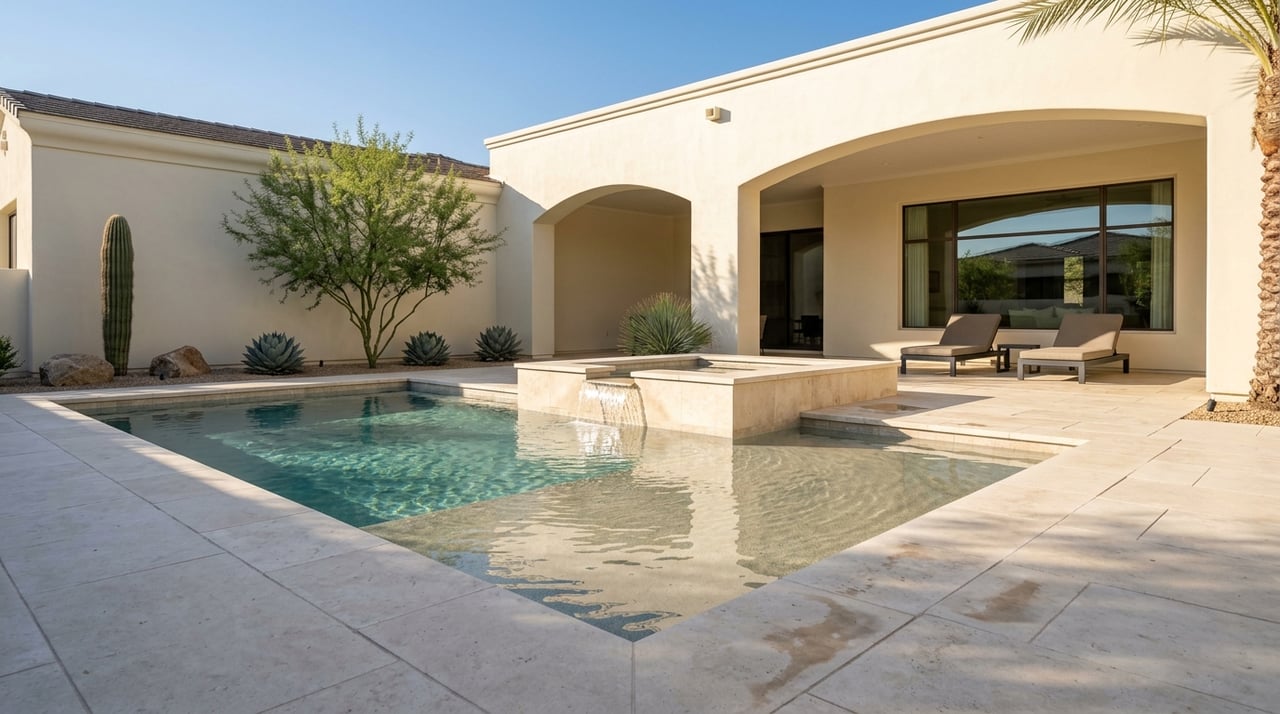
The town’s own planning language describes Paradise Valley as a premier residential community that protects its Sonoran Desert setting. That matters if you are comparing it with more active urban areas nearby. In Paradise Valley, the appeal is often the balance of privacy, scenic beauty, and selective access to luxury amenities.
One of the most interesting things about Paradise Valley is that it does not function like a typical resort zone. Instead of a dense entertainment core, you will find a quiet residential town where resort properties act as dining, spa, and gathering places woven into daily life. For many buyers, that creates a more relaxed kind of luxury.
The town itself highlights fine dining, golf, tennis, spa offerings, and luxury accommodations as part of the local experience. Its attractions framing also points to easy drives to arts and culture, sporting events, shopping, golf, desert hiking, and spa destinations across the Scottsdale-Phoenix area. In practical terms, that means you can enjoy a high-end lifestyle without giving up the calm of a primarily residential setting.
Paradise Valley’s resort identity is not new. It has grown alongside the town for decades, which gives the area a sense of continuity that many buyers notice right away. The local history helps explain why the lifestyle here feels established rather than manufactured.
The town’s history records the Camelback Inn opening in 1936, the Hermosa Inn dating to 1930, Mountain Shadows beginning in the 1950s, and Sanctuary starting as a 1950s tennis club. That long timeline matters because it shows how hospitality, recreation, and residential life have been connected here for generations.
The town’s official resort and spa directory includes Camelback Inn, Hermosa Inn, Mountain Shadows, Omni Scottsdale Resort & Spa at Montelucia, and Sanctuary Camelback Mountain, among others. Even though some of these properties use Scottsdale in their branding, the town directory places several of them at Paradise Valley addresses. If you are relocating, that overlap is useful to know because branding does not always match municipal boundaries.
Sanctuary sits on 53 acres in Paradise Valley and centers its experience around outdoor pools, tennis and pickleball, a fitness center, hiking trails, and a 12,000-square-foot spa. Its dining options include elements and Jade Bar. For a resident, this kind of nearby access can make a weekend feel like a getaway without leaving town.
Omni Montelucia is located at the base of Camelback Mountain and features 293 guest rooms, three pools, six dining outlets, and the 31,000-square-foot Joya Spa. The resort notes that spa reservations are open to the public. That public access is one reason resort amenities can become part of everyday living for Paradise Valley residents.
Camelback Inn is one of the best-known historic resorts in the area. Its dining lineup includes Lincoln Steakhouse & Bar, Rita’s Cantina and Bar, Tavern 37, Starbucks, and Hoppin’ Jacks by the pool, while the Spa at Camelback Inn sits at the base of Mummy Mountain. Its long history in town adds to the sense that Paradise Valley luxury is rooted in place.
Mountain Shadows combines resort stays with golf and dining. Hearth ’61 focuses on local and organic ingredients, and Rusty’s offers another casual option. The property reflects the town’s long-running blend of recreation and hospitality.
The Hermosa Inn is a boutique property with 43 casitas, LON’s, and Blue Door Spa. Its setup highlights how Paradise Valley can feel intimate and refined at the same time. For residents, venues like this often serve as favorite spots for dinner, drinks, and special occasions.
Paradise Valley’s dining scene is shaped heavily by its resorts. The town’s restaurant directory includes Lincoln Steakhouse, Rita’s Kitchen, Prado, Asadero Cocina and Cantina, Lon’s, elements, El Chorro, Weft and Warp, Hearth ’61, and Rusty’s. That pattern tells you a lot about daily life here.
Instead of a large stand-alone restaurant district, Paradise Valley often uses resort restaurants as neighborhood social spaces. That can make dining feel a little more polished and a little less hurried. If you enjoy meeting friends for dinner in scenic settings, this style of local dining may be a strong fit.
At Sanctuary, elements emphasizes seasonal American cuisine with local and organic produce, while Jade Bar offers cocktails, small plates, and patio views across Paradise Valley. At Omni Montelucia, Prado features wood-fired tapas and paellas, and Joya Terrace focuses on spa-oriented poolside fare. These details reinforce the idea that hospitality here is tied closely to lifestyle.
Camelback Inn adds Southwestern fare at Rita’s Cantina and Bar, American cuisine at Lincoln Steakhouse, and poolside convenience at Hoppin’ Jacks. Mountain Shadows brings a more casual ingredient-driven feel through Hearth ’61 and Rusty’s. At The Hermosa Inn, LON’s pairs locally sourced ingredients with a historic setting, patio dining, and wine-cellar events.
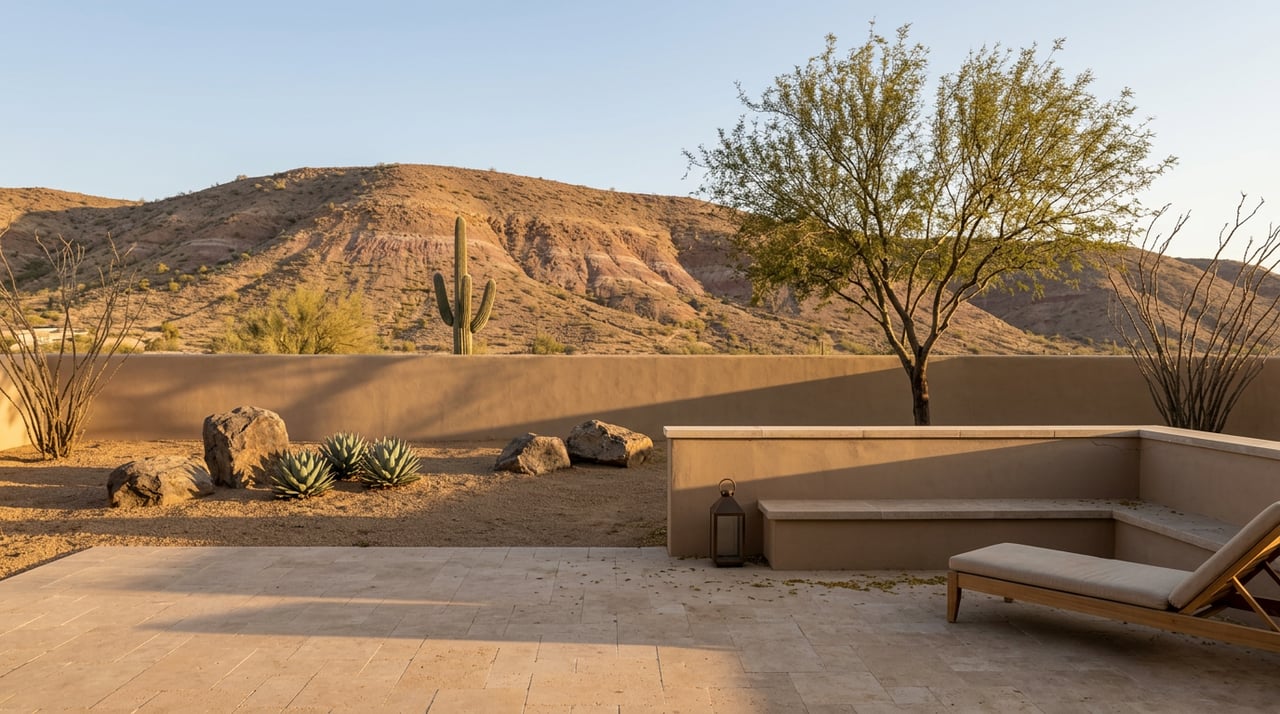
Paradise Valley is shaped by mountain views and preserved desert surroundings. The town’s General Plan says it is nestled around Camelback Mountain, Mummy Mountain, and the Phoenix Mountain Preserve, and that these features define the town’s sense of place. If scenery matters to you, this is one of the area’s biggest lifestyle advantages.
Mummy Mountain is preserved by the Mountain Preserve Trust and does not have public access. That helps protect views and open space around the town. It also reinforces Paradise Valley’s focus on long-term preservation rather than heavy public use everywhere.
Camelback Mountain is one of the region’s best-known outdoor attractions, and Paradise Valley includes one of its trailheads. The City of Phoenix identifies the Echo Canyon Trailhead at 4925 E. McDonald Dr. in Paradise Valley and the Cholla Trailhead at 5150 N. Invergordon Road. Both trails are rated Extremely Difficult.
If hiking Camelback is on your list, it is important to plan carefully. The City of Phoenix notes that parking is limited, trail hours are sunrise to sunset, and dogs are prohibited year-round. For many residents, the value is not only tackling the hike itself but also living close to one of the Valley’s most iconic desert landmarks.
Beyond Camelback, the Phoenix Mountain Preserve along Paradise Valley’s western border adds even more outdoor access. The town’s General Plan says this preserve spans more than 41,000 acres and includes over 200 miles of trails for hiking, biking, and equestrian use. That broader network supports an active outdoor routine beyond the better-known peak hikes.
For many buyers, the biggest takeaway is this: Paradise Valley is not about living inside a resort. It is about living in a highly residential town where resort-style amenities are close by and easy to enjoy. That difference is subtle, but it matters when you are choosing where to put down roots.
The town’s community planning conversations note that commercial resort elements should provide services for residents, including dining, spa, retail, and gathering places. That supports the idea that these properties are not just for visitors. They are part of how residents experience convenience and lifestyle in everyday life.
In real terms, full-time living here often means short drives, mountain backdrops, peaceful streets, and occasional use of hospitality venues that elevate your routine. The luxury feel comes less from nightlife or retail density and more from space, scenery, and access to established amenities. If you want a desert setting with a calm residential character, Paradise Valley stands apart.
Paradise Valley can be especially compelling if you are relocating for lifestyle, considering a second home, or looking for a primary residence with privacy and convenience. The town offers a clear contrast between residential scale and high-end access. That combination is part of what makes it so distinct in the Scottsdale-Phoenix area.
If you are evaluating whether Paradise Valley fits your goals, it helps to look beyond the resort names and focus on how the town functions day to day. You are not just buying near luxury hospitality. You are buying into a setting shaped by desert preservation, mountain views, and a long-standing residential identity.
If you are thinking about buying or selling in Paradise Valley, working with an advisor who understands both lifestyle fit and financial strategy can make the process much clearer. Cassandra Cook brings local market knowledge, luxury-home insight, and finance-informed guidance to help you make a confident move.
Stay up to date on the latest real estate trends.
Cassandra Cook
Address
8388 E Hartford Dr Ste 100
Scottsdale AZ 85255